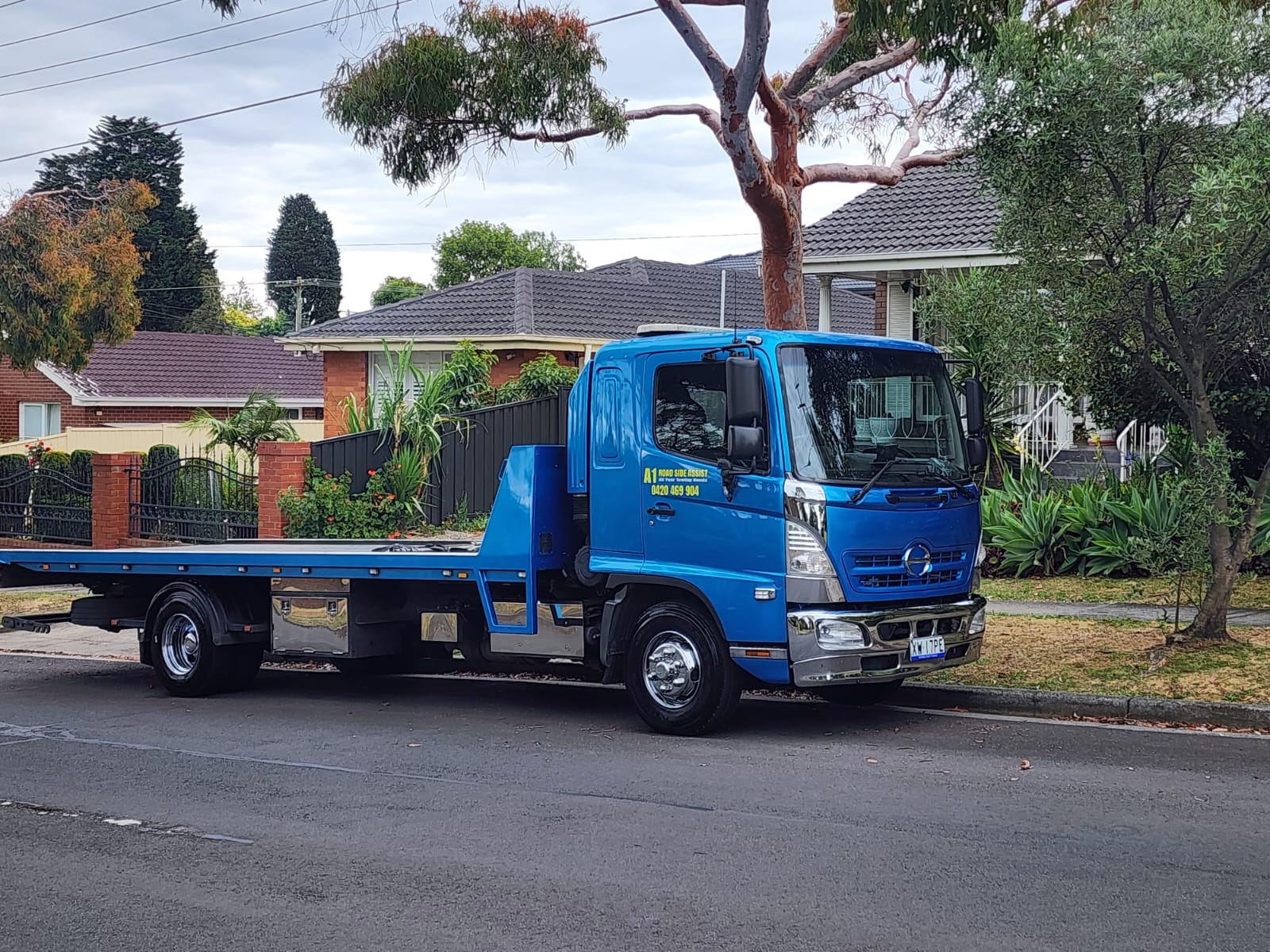
Published by A1 Roadside Assist | South Melbourne, Victoria Information accurate as of 2026-2025. Reviewed regularly to reflect updates from the Essential Services Commission (ESC) Victoria.
Your car stops dead on the Monash Freeway. Or someone clips you at an intersection in South Melbourne and your car needs to be dragged off the road. A tow truck appears within minutes, a driver hands you a form, and suddenly you’re being asked to sign something you haven’t read, for an amount you haven’t agreed to.
This happens to Victorian drivers every day. The confusion is understandable, because tow truck fees in this state exist in a patchwork of regulations, some strictly controlled and others largely left to the market. Knowing the difference before you need a tow is the single most effective thing you can do to protect yourself.
This guide covers the actual rules, the real costs, your legal rights, and what to do if something goes wrong.
Why Tow Truck Fees Are Regulated in Victoria
Tow trucks often arrive at the worst possible moment: after an accident, during peak hour, at night, or in weather that makes thinking clearly difficult. That vulnerability is exactly why Victoria introduced regulations in the first place.
The system is designed to prevent predatory pricing, stop unsolicited tow trucks from soliciting business at crash scenes, and give drivers a clear basis for comparing what they are being charged against what the law allows.
The key agencies involved are:
- Essential Services Commission (ESC) Victoria – Sets and monitors regulated accident towing fees. The ESC publishes official fee determinations that tow operators must follow when towing from accident scenes in designated controlled areas. See their current determinations at esc.vic.gov.au.
- VicRoads – Licenses and registers tow truck operators and drivers. Operators must hold a current licence to legally perform towing services in Victoria. Details at vicroads.vic.gov.au.
- Consumer Affairs Victoria (CAV) – Handles general consumer protection across all services, including non-accident towing. If you believe you have been charged unfairly on a non-regulated tow, CAV is your starting point. Visit consumer.vic.gov.au.
- Victoria Police – Manages accident scenes, can direct which tow truck attends, and handles impoundment matters.
The Most Important Distinction: Accident Towing vs. Breakdown Towing
This distinction determines nearly everything about your rights and the fees that apply.
Accident towing occurs when your vehicle has been damaged in a collision on a public road and cannot be driven. In regulated zones (primarily metropolitan Melbourne and major regional centres), accident towing fees are set by the ESC. The tow operator cannot charge more than the regulated rate.
Breakdown towing (also called non-accident towing) covers everything else: mechanical failure, flat battery, flat tyre, running out of fuel, being bogged, towing from private property, and so on. These tows are not subject to the ESC fee schedule. Prices are set by the operator and governed by general consumer law.
This is not a minor administrative difference. After an accident in a controlled area, you have strong regulatory protection and a clear benchmark for what you should pay. After a breakdown, the price is essentially whatever the operator charges, which means your negotiating position and awareness matter a great deal.
Regulated Accident Towing Fees: What the ESC Sets
Within ESC-controlled areas, tow operators must charge fees that comply with the current determination. The fee structure covers a range of components, not just the act of towing. Below is a summary of the approximate regulated fee ranges. Check the ESC website for the current determination, as figures are reviewed and updated periodically.
| Fee Component | Approximate Regulated Range | Conditions |
|---|---|---|
| Call-out fee (standard hours) | $200 – $300 | Includes initial hook-up; varies by zone |
| After-hours / weekend surcharge | +25% to 50% | Applied outside standard business hours |
| Per-kilometre fee (beyond initial distance) | $4 – $6 per km | After an initial free distance (typically 10-15 km) |
| Storage fee | $30 – $60 per day | After an initial free storage period (typically 24-48 hours) |
| Administration fee | $20 – $40 | For processing paperwork and vehicle release documentation |
| After-hours release fee | $50 – $100 | For collecting your vehicle outside business hours |
Disclaimer: These figures are approximate and subject to change by the ESC. Always verify current rates at esc.vic.gov.au before or after an accident tow.
Outside controlled areas (some rural and regional roads), accident towing fees may not be regulated to the same degree. If you are unsure whether your tow occurred in a controlled area, contact the ESC directly.
Your Rights as a Victorian Driver
Knowing your rights does not require a legal background. The core principles are straightforward.
The right to choose your tow operator. For breakdown towing, you have the right to call whoever you want. If you have roadside assistance through your insurer or a provider like A1 Roadside Assist, call them first. Do not let a tow truck that arrived uninvited pressure you into using their service. For accident towing in regulated zones, police or emergency services may direct the tow, but you often retain the right to specify where your vehicle is taken and which repairer you prefer.
The right to a written quote before the tow begins. For non-accident towing especially, ask for an itemised quote before you agree to anything. A legitimate quote should include the call-out fee, towing distance rate, any applicable surcharges, storage fees if the vehicle will not be collected immediately, and any fees for special equipment. If an operator refuses to provide a written quote, that is a warning sign.
The right to proper documentation. You are entitled to a towing authority form and a detailed invoice. These documents should include the towing company’s name, the driver’s ID and licence number, the vehicle details, the destination, and a complete breakdown of all charges. Do not sign anything you have not read. Never sign a blank authorisation form.
The right to dispute charges. If you believe you have been overcharged, you have a formal process available to you. More on that below.
Common Problems and What to Do About Them
“I was charged for storage I didn’t expect.”
Sarah from Dandenong had her car towed after a minor collision on the Nepean Highway. She assumed she could collect it the next morning but wasn’t told the yard closed at 4pm. By the time she could get there, she had accumulated two days of storage fees she hadn’t anticipated.
Your right: For accident towing, storage fees are regulated and must comply with the ESC schedule, including any specified free period. For breakdown towing, fees must be reasonable and disclosed upfront under consumer law.
What to do: Ask explicitly about storage terms before the tow happens. If fees have already accrued unexpectedly, request a breakdown in writing, check the fees against the ESC determination if it was an accident tow, and contact the company to dispute any undisclosed charges. If that fails, contact CAV.
“The invoice had fees I was never told about.”
James from Footscray was charged a “heavy vehicle surcharge” after a breakdown tow, despite his car being a standard sedan. No one mentioned this fee before the tow.
Your right: For non-accident towing, all fees must be disclosed before service begins. Undisclosed charges are inconsistent with consumer law obligations.
What to do: Refuse to pay undisclosed fees at the time if you can. If you have already paid, write “paying under protest” on the payment slip or note it in writing to the company. Gather your invoice and any prior communication, then lodge a complaint with CAV.
“A tow truck showed up at the accident scene without me calling them.”
After a bingle in St Kilda, Mark was approached by a tow truck driver who had apparently monitored emergency radio traffic and arrived unsolicited. The driver pressured him to sign paperwork immediately.
Your right: In regulated areas, unsolicited tow trucks “chasing” accident scenes are prohibited. You are under no obligation to use a tow truck you did not call.
What to do: Do not engage. Wait for the tow service you have called or the one directed by police. If an unsolicited driver is persistent, report the incident to Victoria Police and the ESC.
“They won’t release my car until I pay, but the charges seem wrong.”
This situation feels like a trap, and for good reason. Tow operators are legally permitted to hold a vehicle until legitimate, documented fees are paid. However, the fees must be legitimate.
What to do: If you believe the charges are inflated but you need your vehicle back, pay under written protest and immediately begin a formal dispute. Document everything, photograph the invoice, and contact CAV or the ESC depending on whether it was an accident or breakdown tow.
“There was no proper invoice.”
A complete, itemised invoice is not optional. It is your right.
What to do: Demand one before paying. If the company refuses to provide one, that itself is grounds for a complaint to CAV. You cannot effectively dispute charges you do not have in writing.
How to Dispute an Unfair Tow Truck Charge
Step 1: Gather your documentation. Collect everything: photos of the scene, photos of your vehicle, the towing authority form, the invoice, any written quotes, and a record of all communications including dates and names of people you spoke to.
Step 2: Contact the tow company directly. Put your concerns in writing. Reference the specific fees you are disputing and the regulation or consumer law principle that applies. Many issues resolve at this stage, particularly with operators who know they are not in a strong position.
Step 3: Escalate to Consumer Affairs Victoria. If the tow company does not resolve the matter, lodge a formal complaint with CAV. They can mediate between you and the operator and take enforcement action where warranted. Contact CAV or by phone.
Step 4: Involve the ESC for accident towing disputes. If the tow followed an accident in a regulated area, the ESC has specific jurisdiction over fee compliance. They can investigate whether the operator charged above the determination and enforce penalties where applicable.
Step 5: Victorian Civil and Administrative Tribunal (VCAT). For unresolved disputes involving money, the Small Claims list at VCAT is a realistic option. Filing fees are modest and the process does not require a lawyer.
Expect disputes with tow companies to take anywhere from a few days to several weeks depending on how cooperative the operator is. Disputes that reach CAV or VCAT take longer but carry more weight.
Victorian Towing Incident Checklist
Print this or save it to your phone before you need it.
Before the tow truck arrives:
- Turn on hazard lights and move to a safe position if possible
- Call emergency services if there are injuries or if the road is blocked
- Contact your insurer to understand your coverage and preferred provider
- Call your preferred roadside assistance provider (save A1 Roadside Assist in your contacts: South Melbourne-based, available for metropolitan and surrounding areas)
- Photograph the vehicle, the scene, any damage, and surrounding road markings
When the tow truck arrives:
- Verify the company name and driver’s licence/ID before signing anything
- For non-accident towing, request a written, itemised quote before work begins
- Confirm the destination of your vehicle in writing
- Read every form carefully before signing – never sign a blank authorisation
- Take a photo of the towing authority form and the invoice
- Note the tow truck’s registration number and company name
After the tow:
- Keep all paperwork and receipts
- Follow up with your insurer about coverage and reimbursement
- Monitor your invoice for any charges that appear after the fact
- If anything seems wrong, act quickly – disputes are easier to pursue while evidence is fresh
Benchmark: What Does a Tow in Melbourne Actually Cost?
The table below compares estimated pricing for common non-accident towing scenarios. The A1 Roadside Assist ranges reflect transparent, upfront pricing for services in South Melbourne and the broader metropolitan area. The “unregulated market” column illustrates the range drivers can face when engaging an operator with no published pricing.
Disclaimer: All figures are estimates and vary based on specific circumstances, location, vehicle condition, and time of day. Contact A1 Roadside Assist directly for an accurate quote.
| Scenario | A1 Roadside Assist (Approx.) | Unregulated Market Range | Key Variables |
|---|---|---|---|
| Metro breakdown, short distance (10 km) | $150 – $250 | $250 – $400+ | Distance, time of day, vehicle type |
| Rural breakdown, medium distance (50 km) | $300 – $500 | $500 – $800+ | Remote location, call-out fee, distance |
| Standard hatchback or small sedan | Included in base rate | May vary | Vehicle weight and size |
| Large SUV or ute | $200 – $350 (includes heavy vehicle component) | $400 – $700+ | Specialised equipment, vehicle weight |
| After-hours or weekend tow | Add $50 – $100 | Add $100 – $200+ | Urgency, operator availability, time penalty |
The gap between transparent pricing and unregulated pricing is not always this wide, but it can be. The difference between a provider who publishes their rates and one who does not becomes very significant at midnight on a country road.
Understanding Your Insurance Coverage
Before a breakdown happens, spend ten minutes reviewing your car insurance policy. Many Australians discover their policy includes roadside assistance or towing coverage only after they have paid out of pocket for a tow they did not need to fund themselves.
Look for: whether the policy includes roadside assistance as standard or as an add-on, the maximum towing distance covered, whether storage fees are included, and any restrictions on which tow operators are approved. Some policies require you to use their nominated provider; others allow free choice.
If your policy covers towing, call your insurer first when you break down. They will often manage the entire process, including arranging and paying for the tow directly.
Choosing a Roadside Assistance Provider You Can Trust
A reputable provider is not defined by their advertising. It is defined by whether they tell you the full cost before they begin, whether their drivers are licensed and identifiable, and whether they treat you fairly when something goes wrong.
When evaluating a roadside assistance provider, look for published pricing rather than “call for a quote,” local knowledge of the roads and conditions you are likely to encounter, verifiable licensing with VicRoads, and a clear process for handling complaints.
Regular vehicle maintenance also reduces the likelihood you will ever need an emergency tow. Keep tyres at the correct pressure, have your battery tested before winter, and address warning lights promptly. Prevention is cheaper than any call-out fee.
A1 Roadside Assist: South Melbourne Towing with Transparent Pricing
A1 Roadside Assist operates out of South Melbourne and provides towing and roadside assistance across metropolitan Melbourne and surrounding areas. Our operators are licensed with VicRoads and our pricing is provided upfront before any work begins.
For accident towing, we operate in accordance with ESC fee determinations. For breakdown towing, we provide itemised written quotes before we touch your vehicle. There are no administration fees that appear on an invoice after the fact, and no pressure to use a particular repairer.
If you break down in South Melbourne or anywhere in metropolitan Melbourne, save our number before you need it. A stressful situation becomes considerably less stressful when you already know who to call and what they charge.
Key Takeaways
Tow truck regulations in Victoria protect you most strongly after an accident in a controlled area, where ESC-regulated fees apply. For breakdown towing, general consumer law applies and your best protection is knowing your rights and insisting on a written quote before the tow begins.
The three regulatory bodies that matter most are the ESC (for accident towing fees), CAV (for general consumer protection and disputes), and VicRoads (for operator licensing). If something goes wrong, you have a clear escalation path through each of them.
Document everything, read before you sign, and choose providers who are willing to put their pricing in writing before they ask for yours.
This article reflects Victorian regulations and general industry practices as of 2026-2025. Laws and fee determinations are subject to change. For the most current ESC fee schedule, visit esc.vic.gov.au. For consumer advice, visit consumer.vic.gov.au.
A1 Roadside Assist does not provide legal advice; if you are involved in a dispute, contact Consumer Affairs Victoria or seek independent legal counsel.